AI mood tracker for remote teams
A mood tracker for remote teams. Employees record how they feel, helping managers spot changes in team wellbeing and identify who may need support.
Key contributions
Based on the first version’s engagement results, I proposed ways to make check-ins valuable to employees themselves. I agreed on the direction with the project manager and designed an experience connecting mood entries with personal trends and AI reflections.
I formulated criteria for evaluating AI feedback, defining what a useful reflection should offer and which responses could feel generic, repetitive or emotionally inappropriate.
When Tracking Feels Pointless, Users Leave
The initial version of the product saw strong early adoption, but engagement dropped sharply by week three. The problem wasn't technical: users were asked to log their mood repeatedly but got almost nothing in return. The only feedback was a basic mood chart that was hard to find, offering no interpretation or meaningful insight. Each interaction ended with a random 'fun' GIF, which caused confusion and even undermined trust in a sensitive context. Without clear value or understanding, there was no reason for users to keep participating, making long-term engagement unsustainable.
Designing For Reflection, Not Just Logging
I approached the redesign as a strategic reset, turning the product from a daily mood tracker into a reflection-driven system where insight is the main experience. I defined a conceptual framework for AI output quality with four dimensions: relevance to context, emotional appropriateness, novelty, and subtle actionability. We didn't implement testing, but this framework guided design choices around prompt structure, content personalization, and the insights dashboard to ensure the product delivered meaningful reflections instead of raw data.
Core Loop For Reflection And Insight
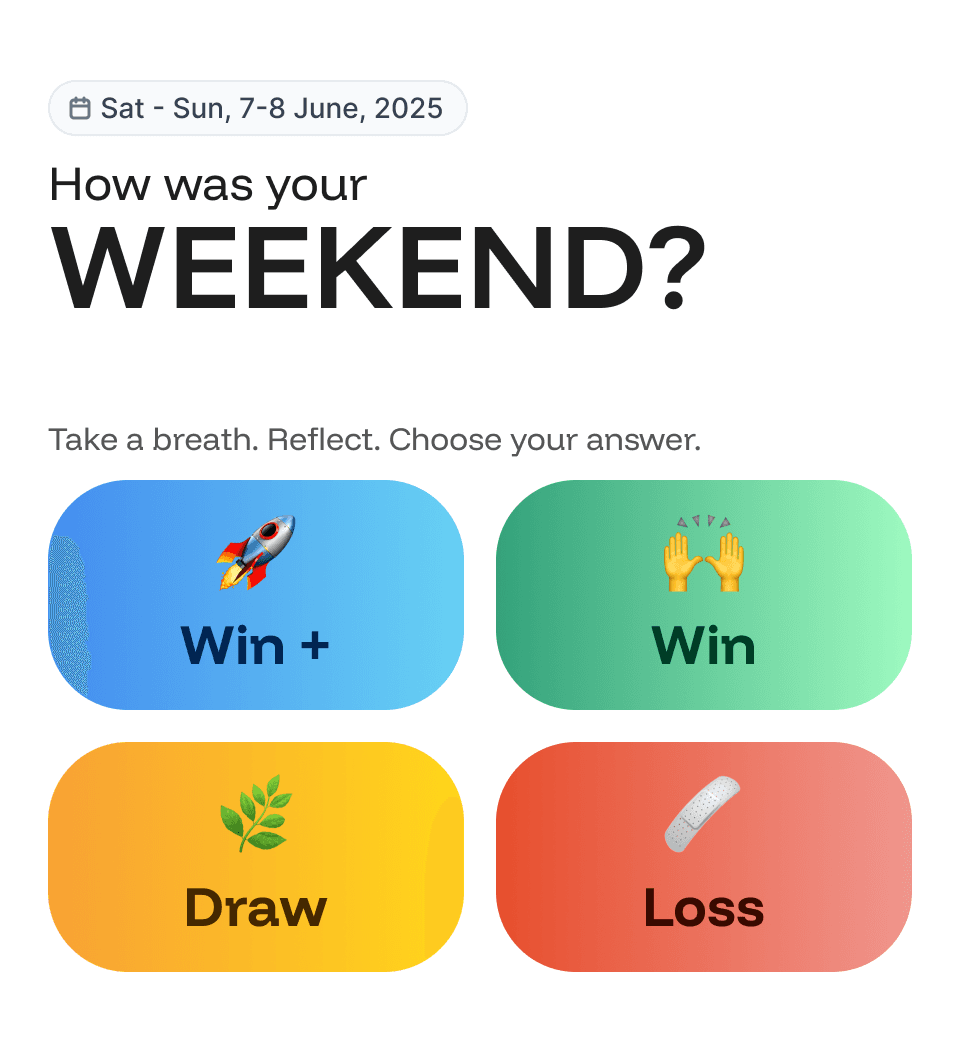
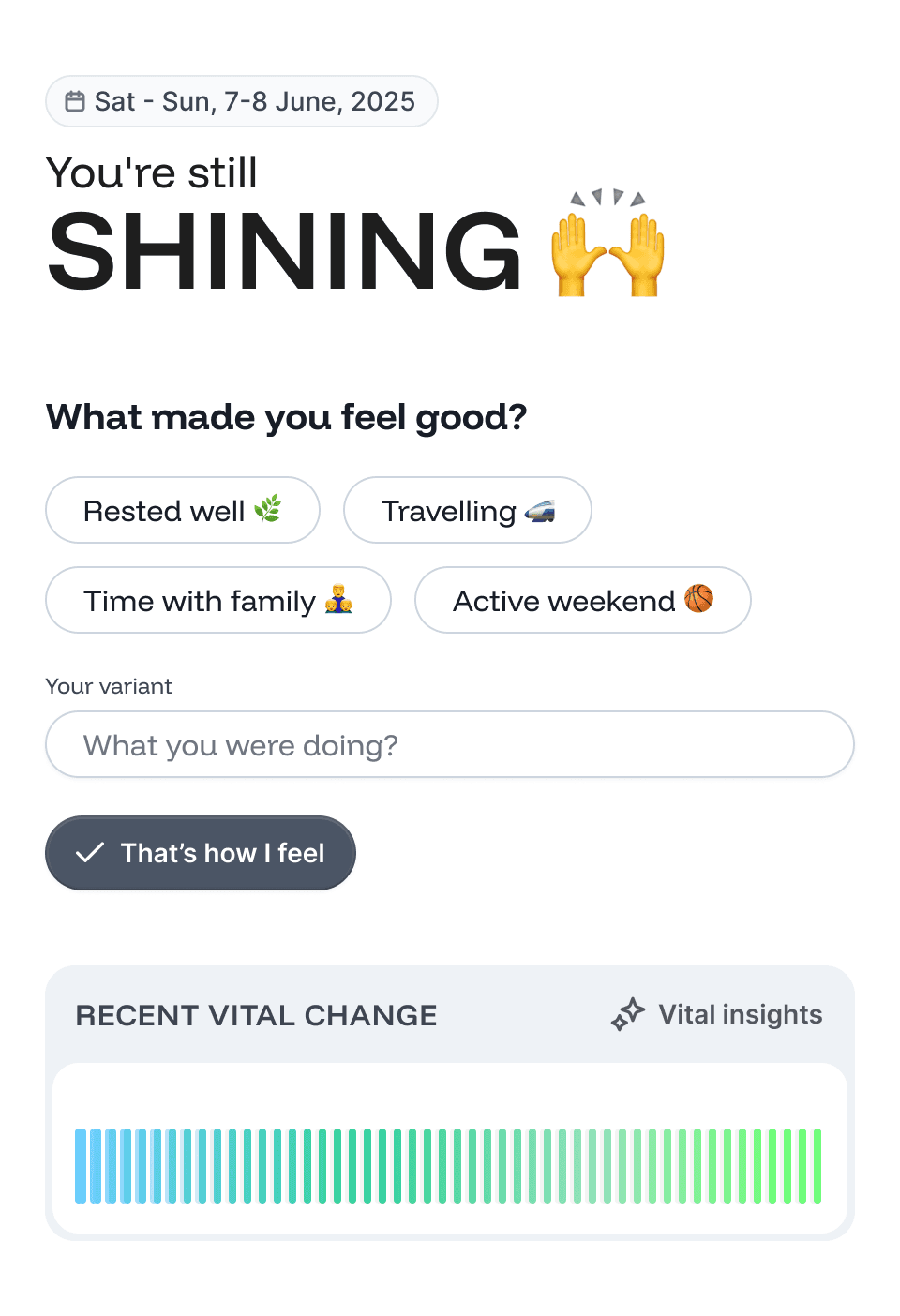
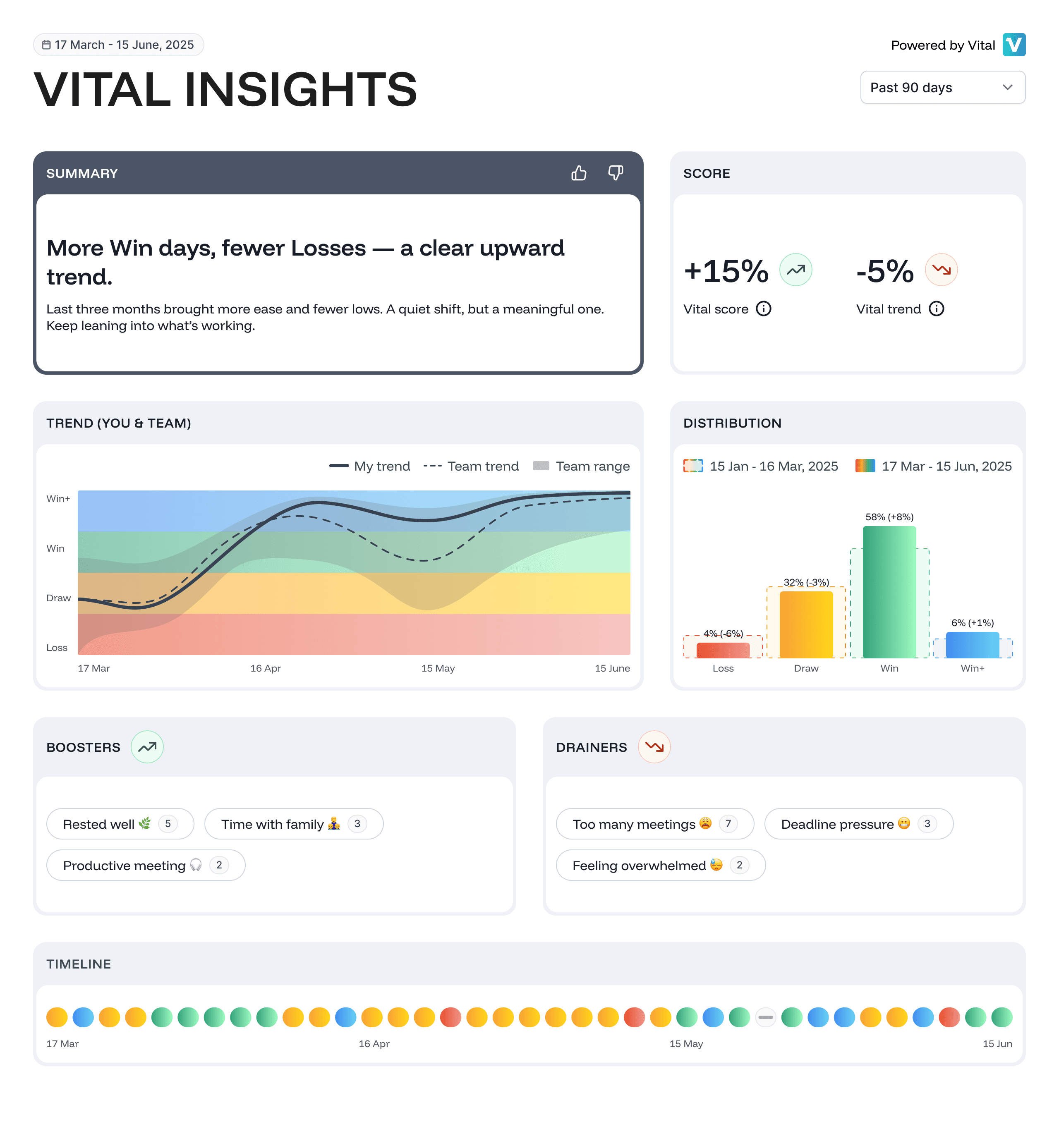
Redesigned the core experience to prioritize meaningful reflection over raw data. Check-ins were reduced to three context-aware moments per week to improve compliance and trend reliability, with emotional state reframed as 'Vital' to remove judgment and self-censorship. Each entry offered immediate trend context and optional attribution to influencers, embedding reflection into the loop. Insights became the primary output through a personal dashboard that highlighted patterns, directional change, and historical trends, with AI acting as a translation layer to interpret data rather than automate it.
LLM Evaluation Framework For Meaningful Feedback
To make AI-generated reflections genuinely valuable, I defined a conceptual evaluation framework focused on output quality rather than technical metrics. I identified four dimensions critical to user trust and engagement:
- Relevance: Aligns with the user's actual mood and context
- Emotional appropriateness: Responds sensitively without invalidating feelings
- Novelty: Avoids repetition and fatigue across entries
- Subtle actionability: Suggests reflection without pressure
This framework guided design decisions around prompt structure, personalization, and dashboard presentation. It allowed us to reason about AI behavior, anticipate low-value outputs, and ensure the system could support long-term engagement even without live testing.
Insights-Driven Redesign To Boost Engagement
The redesign established a clear V2 concept focused on driving meaningful engagement. We started with hypotheses about what would make mood tracking valuable and used AI to validate these ideas within the concept, shaping how reflections and insights could work in practice. The project clarified why the original product failed to retain users and produced a concrete framework for future design decisions around reflection-driven interactions.
Learnings
Immediate Value
Users stay engaged only when every check-in provides clear insight.
AI as Translator
AI should interpret and clarify user input, guiding reflection without pressure.
Meaningful Novelty
Variation keeps the experience engaging; repetition causes fatigue.
Reframe for Impact
In R&D, redefining the problem often matters more than interface refinement.